20 December 2010
Favorite reads of the year 2010


1. Mon by Natsume Sōseki, tr. Francis Mathy
2. The Wild Geese by Mori Ōgai, tr. Kingo Ochiai and Sanford Goldstein
3. Piercing by Murakami Ryū, tr. Ralph McCarthy
4. Some Prefer Nettles by Tanizaki Junichirō, tr. Edward G. Seidensticker
5. Guns, Germs and Steel by Jared Diamond
6. Death in Midsummer by Mishima Yukio, tr. Edward G. Seidensticker et al.
7. The Last Samurai by Helen DeWitt
8. The Jaguar by João Guimarães Rosa, tr. David Treece
9. The Hare by César Aira, tr. Nick Caistor
10. The Insufferable Gaucho by Roberto Bolaño, tr. Chris Andrews
11. Blow-Up and Other Stories by Julio Cortázar, tr. Paul Blackburn
12. Tres by Roberto Bolaño, tr. Erica Mena, unpublished translation
Books read in 2010:
http://booktrek.blogspot.com/2010/05/rises-reading-diary-2010.html


16 December 2010
Reading list: Po-mo
"The thing about postmodernism is it's impossible to pin down exactly what might make a book postmodern," says the LA Times book blog Jacket Copy. This, however, did not prevent them from compiling last year a list of essential postmodern works of literature.
A postmodernist work, according to them, contains at least 2 of the following attributes:
- thick (1,000+ pages)
- the author is a character
- self-contradicting plot
- distrusts/plays with form
- comments on its own bookishness
- plays with language
- pastiche of letters, lyrics, other books, etc.
- reality and fiction are blurred
- includes historical falsehood
- thin (less than 200 pages)
- po-mo progenitor
61 essential postmodern reads
Kathy Acker's "In Memorium to Identity"
Donald Antrim's "The Hundred Brothers"
Margaret Atwood's "The Blind Assassin"
Paul Auster's New York Trilogy
Nicholson Baker's "The Mezzanine"
J.G. Ballard's "The Atrocity Exhibition"
John Barth's "Giles Goat-Boy"
Donald Barthelme's "60 Stories"
John Berger's "G"
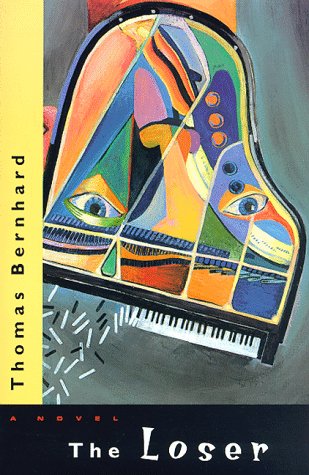
Thomas Bernhard's "The Loser"
Roberto Bolaño's "2666"
Jorge Luis Borges's "Labyrinths"
William S. Burroughs's "Naked Lunch"
Robert Burton's "Anatomy of Melancholy"
Italo Calvino's "If on a Winter's Night a Traveler"
Julio Cortazar's "Hopscotch"
Robert Coover's "The Universal Baseball Association, Henry J. Waugh, Proprietor"
Stanley Crawford's "Log of the S.S. Mrs. Unguentine"
Mark Danielewski's "House of Leaves"
Don Delillo's "Great Jones Street"
Philip K. Dick's "The Man in the High Castle"
E.L. Doctorow's "City of God"
Geoff Dyer's "Out of Sheer Rage: Wrestling With D. H. Lawrence"
Umberto Eco's "The Mysterious Flame of Queen Loana"
Dave Eggers's "A Heartbreaking Work of Staggering Genius"
Steve Erickson's "Tours of the Black Clock"
Percival Everett's "I Am Not Sidney Poitier"
William Faulkner's "Absalom! Absalom!"
Jonathan Safran Foer's "Everything Is Illuminated"
William Gaddis's "JR"
William Gass's "The Tunnel"
John Hawkes's "The Lime Twig"
Nathaniel Hawthorne's "The Scarlet Letter"
Aleksandar Hemon's "The Lazarus Project"
Michael Herr's "Dispatches"
Shelley Jackson's "Skin"
Franz Kafka's "Metamorphosis"
Milan Kundera's "The Book of Laughter and Forgetting"
Jonathan Lethem's "Motherless Brooklyn"
Ben Marcus's "Notable American Women"
David Markson's "Wittgenstein's Mistress"
Tom McCarthy's "Remainder"
Joseph McElroy's "Women and Men"
Steven Millhauser's "Edwin Mullhouse"
Haruki Murakami's "The Wind-Up Bird Chronicle"
Vladimir Nabokov's "Pale Fire"
Flann O'Brien's "At Swim-Two-Birds"
Tim O'Brien's "The Things They Carried"
Harvey Pekar's "American Splendor"
Thomas Pynchon's "Gravity's Rainbow"
Philip Roth's "The Counterlife"
W.G. Sebald's "The Rings of Saturn"
William Shakespeare's "Hamlet"
Gilbert Sorrentino's "Mulligan Stew"
Christopher Sorrentino's "Trance"
Art Spiegelman's Maus I & II
Laurence Sterne's "The Life and Opinions of Tristram Shandy"
Scarlett Thomas's "PopCo"
Kurt Vonnegut's "Slaughterhouse Five"
David Foster Wallace's "Infinite Jest"
Colson Whitehead's "John Henry Days"
Source: http://latimesblogs.latimes.com/jacketcopy/2009/07/the-mostly-complete-annotated-and-essential-postmodern-reading-list.html
11 December 2010
"Dumating ang Takipsilim" (Mark Angeles)
Night Is Upon Him
BY MARK ANGELES
It is such a secret place, this land of tears.
- The Little Prince
Night is upon him
without his expecting it.
And he decides to come back
to the garden, his secret garden—
a glimpse into his own territorial
discovery and embrace;
the garden of tears
which trace each crease
of dried leaves
falling delicately
in autumn season.
But the trees are not there
anymore, the cradle
that rocked him is not there,
the yellow bulbs that bore
the flowers are not there.
Everything is gone except
the red color of his face.
But he does not shed a tear.
He stands in the center
without pursing his lips
or blinking his eyes.
He stands in the center
and watches the waving
sadness taking shape
in the clouds. He watches
the early morning light,
the ceaseless stream
of life begging to escape
from his grasp.
Something seems not right in that place.
His spirit is leaving
from between his chest.
And everything around him
dissolves like his teeth.
Night falls and the wind blows
and the cold washes his face.
All the stars that night
smile at him. Millions
of distant stars smile
at him that night. The night
shines like broken glass
mixed with sand
and dried under the sun.
Night is upon him
without his expecting it
but he knows what it means.
TRANSLATED FROM FILIPINO
10 December 2010
Conversation about a cathedral, 2
We play at believing ourselves immortal. We delude ourselves in the appraisal of our own works and in our perpetual misappraisal of the works of others. See you at the Nobel, writers say, as one might say: see you in hell.- 2666
In his last interview for the Mexican Playboy, Roberto Bolaño was asked of his opinion of those who think he will win the Nobel Prize. “I am sure, dear Maristain, that I will not win it, as I am sure that some lazy person from my generation will win it and not even in passing mention me during his or her Stockholm speech.”
I’m not sure what Bolaño meant by a lazy person. Is that the same as a lazy writer? The present laureate, Mario Vargas Llosa, is not of the same generation as Bolaño. Nor did he mention Bolaño in his Nobel lecture, though the Peruvian did harbor certain opinions of the Chilean.
It’s interesting nonetheless that two young writers from Peru, in talking about Vargas Llosa’s win, couldn’t help but speak of Bolaño in the same breath.
Bolaño is not of the same generation as Vargas Llosa’s. Bolaño is what came after. We would have to wait until 2020 – at least that’s the year Carlos Fuentes predicted, in his novel, that César Aira will win the Nobel – when a Latin American writer of the same generation as Bolaño will stand on a Swedish podium.
The last interview took place shortly before Bolaño’s death, and one can surmise that Bolaño was sure that he will not win it because “death is certain”, as he wrote between his teeth in Last Evenings on Earth. His first book to be translated in English,
Not unless it was decided in Comala.
Bolaño could not have predicted Vargas Llosa’s win. Or maybe he just did. In the last piece in The Insufferable Gaucho (trans. Chris Andrews), in an essay called “The Myths of Cthulhu” (a fascinating essay wherein Bolaño gave a diagnosis of Latin American literature, but really a meandering, perhaps unfinished, yet very snobbish essay, snobbish in a bookish-snobbish way, an essay of the most wicked negative psychology), he differentiated the virtues (vices) of the bestselling writers (Pérez Reverte, Muñoz Molina, et al.) from those no one reads anymore (Puig, Arlt, et al.). In the same essay, he discussed how critics cling to old masters and what this implies for Latin American letters. And how much literature loves power too...
Today I read an interview with a famous and shrewd Latin American author. They ask him to name three people he admires. He replies: Nelson Mandela, Gabriel García Márquez, and Mario Vargas Llosa. With that answer as a starting point, you could write a whole thesis about the current state of Latin American literature. The casual reader might wonder what links those three figures. There is something that links two of them: the Nobel Prize. And there is something more that links all three: years ago they were all left wing…. All three have made way for deplorable heirs: the clear and entertaining epigones of García Márquez and Vargas Llosa, and, in the case of Mandela, the indescribable Thabo Mbeki, the current president of South Africa, who denies the existence of AIDS. How could anyone name those three, without batting an eyelid, as the figures he most admires? Why not Bush, Putin and Castro? Why not Mullah Omar, Haider and Berlusconi? Why not Sánchez Dragó, Sánchez Dragó and Sánchez Dragó, disguised as the Holy Trinity?
And from there Roberto's own eyelids hit for low batting average.
08 December 2010
Don Q, via Cide Hamete Benengeli
Do we live in the age of translation?
Cervantes, an early instance of greatness in the "history" of the novel, has a ready answer in Don Quixote. The novel is presented as a translation by a Spanish-speaking Moor, from the Arabic of a certain historian named Cide Hamete Benengeli, of the history of the knight errant Don Quixote and his squire Sancho Panza. While the unnamed narrator recounts this "translated" history, he constantly reminds us of this fact. At several junctures in the novel, the narrator interjects the (i) translator's and (ii) his own annotations of the Arab's version of the events. In Part II, for example, the narrator interrupts the story to say:
Cide Hamete, the chronicler of this great history, begins this chapter with the words: 'I swear as a Christian and as a Catholic ...'; to which the translator adds that when Cide Hamete swore as a Christian and a Catholic, being a Moor, as he most certainly was, he only meant to say that just as when the Christian and Catholic swears something he swears, or should swear, the truth, and he swears to tell the truth in everything he says, so Cide Hamete was also telling the truth, as if he were swearing as a Christian and a Catholic, in everything he wrote about Don Quixote ... [Part II, Chapter XXVII, tr. John Rutherford]
Ah, the truth! And then Cide Hamete (through the translator, via the narrator) goes on to discuss a seeming "inconsistency" of previous events in the first part of the history, specifically the theft of Sancho Panza's donkey by the convict Ginés de Pasamonte. The inconsistency arises presumably from the "printers' carelessness" that led to the omission of the incident in the publication of the first part of the history. This "has led many people to offer their opinions and blame the printing mistake on the author's poor memory."
It appears then Cervantes craftily introduces a mistake in this long and clumsy history, but its teller (Cide Hamete), its translator, and its narrator are there to set the record straight. The mistake acquires a new kind of significance as Ginés, now a puppeteer and master of a fortune-telling ape, becomes embroiled again in the glorious adventure of our knight errant and his squire.
In an article in The New York Times, novelist Michael Cunningham argues that the act of novel writing is an act of translation: "the original novel is, in a way, a translation itself. It is not, of course, translated into another language but it is a translation from the images in the author’s mind to that which he is able to put down on paper." The sense of translation here is as an internal interpretation of the novelist's story before finally writing it down. This is for works in the original language. As for translated books: "The translator, then, is simply moving the book another step along the translation continuum. The translator is translating a translation." Cunningham completes his idea:
Here, then, is the full process of translation. At one point we have a writer in a room, struggling to approximate the impossible vision that hovers over his head. He finishes it, with misgivings. Some time later we have a translator struggling to approximate the vision, not to mention the particulars of language and voice, of the text that lies before him. He does the best he can, but is never satisfied. And then, finally, we have the reader. The reader is the least tortured of this trio, but the reader too may very well feel that he is missing something in the book, that through sheer ineptitude he is failing to be a proper vessel for the book’s overarching vision.
In the case of the Quixote, a pack bag of postmodern tricks and a vessel of wit, the act of its translation is more assiduously mapped. The translator is translating a translation of a translation of a translation of a translation. Confound the reader! To specify: the translator (Edith Grossman, or John Rutherford, or Burton Raffel, or Samuel Putnam, etc.) is translating a translation (by the unnamed narrator of the Quixote) of a translation (by the Moor who translates to Spanish) of a translation (by the Arab historian Cide Hamete Benengeli) of a translation (by Miguel de Cervantes Saavedra). And lest we forget, the unnamed narrator is only the “second author” of the history, the “first author” being the one who was telling it right up to the section where the manuscript was supposedly truncated at the end of Part I, Chapter VIII.
In the case of Borges's "Pierre Menard, Author of the Quixote", a ménage à trois between the novelist, translator, and reader is compounded by another interest, lost in flames. But that's for another post maybe.
To answer the question posed above, it may be best to quote again an interruption by our narrator regarding the integrity of Don Quixote's written history, demonstrating as it is how the telling of Truth in every History is ever so relative in every telling of it. At every remove, of the novelist from the story, of the translator from the source, of the teller from the tale, and of the reader from the page (not to mention the English translator's remove from the Spanish prose), the accumulation of subjective interpretations and authorial decisions is staggering.
It is said that in the original manuscript of this history one reads that when Cide Hamete came to write this chapter his translator did not render it as the Moor had written it, with some sort of complaint against himself for having undertaken such a dry and limited history as this one about Don Quixote, always feeling himself restricted to talking about him and Sancho, never daring to venture out into any digressions or more serious and entertaining episodes; and Cide Hamete added that to have his mind, his hand and his pen always constrained to writing about one subject and speaking through the mouths of so few characters was intolerable drudgery, which yielded nothing to the author's advantage, and that to avoid this problem he had in the first part had recourse to certain tales, like those of Inappropriate Curiosity and the Captive Captain, which stand, as it were, apart from the main story – although the other tales narrated there are events in which Don Quixote himself was involved and which could not be omitted. [Part II, Chapter XLIV]
And then the narrator went on to describe Cide Hamete's justifications for the apparent divergence of style between the first and second parts of the history. The translator and narrator of the Quixote both seem to be acting as apologists for the historian, smoothing out the wrinkles in the narrative, and justifying the choices and style of its composition. Cide Hamete is, at least according to the translator, undermining the very virtues of the history he is writing, stopping short of calling it “boring” in many places. These self-references constitute an assertion of the freedom of the “multiple storytellers” in Don Quixote to comment on the work at hand and play with realism, without which the story will indeed be just an assembly of “intolerable drudgery,” “a dry and limited history.”
I'm presently on page 792 of the book, which I'm reading intermittently since July as part of a group read, at Stu’s Winstonsdad's Blog. Obviously I was waylaid by other books and failed to stick to schedule.
(First posted in early form in Project Dogeared)
Subscribe to:
Posts (Atom)